The Fashion Design category is an immersive journey into the world of wearable art, garment construction, and brand storytelling. This program is designed to transform creative sparks into industry-ready skills, moving from the conceptual stages of illustration and trend forecasting to the technical mastery of pattern drafting and textile science.
Students will explore the historical context of fashion while embracing modern innovations in sustainable design and 3D garment modeling. By the end of this curriculum, learners will not only understand how to design a collection but also how to navigate the business of fashion—from sourcing materials to the final runway presentation.
Our Goal: To bridge the gap between imagination and the sewing machine, fostering designers who are technically proficient, ethically conscious, and commercially savvy.
Some of the units to be learnt include;
- pattern drafting
- garment construction
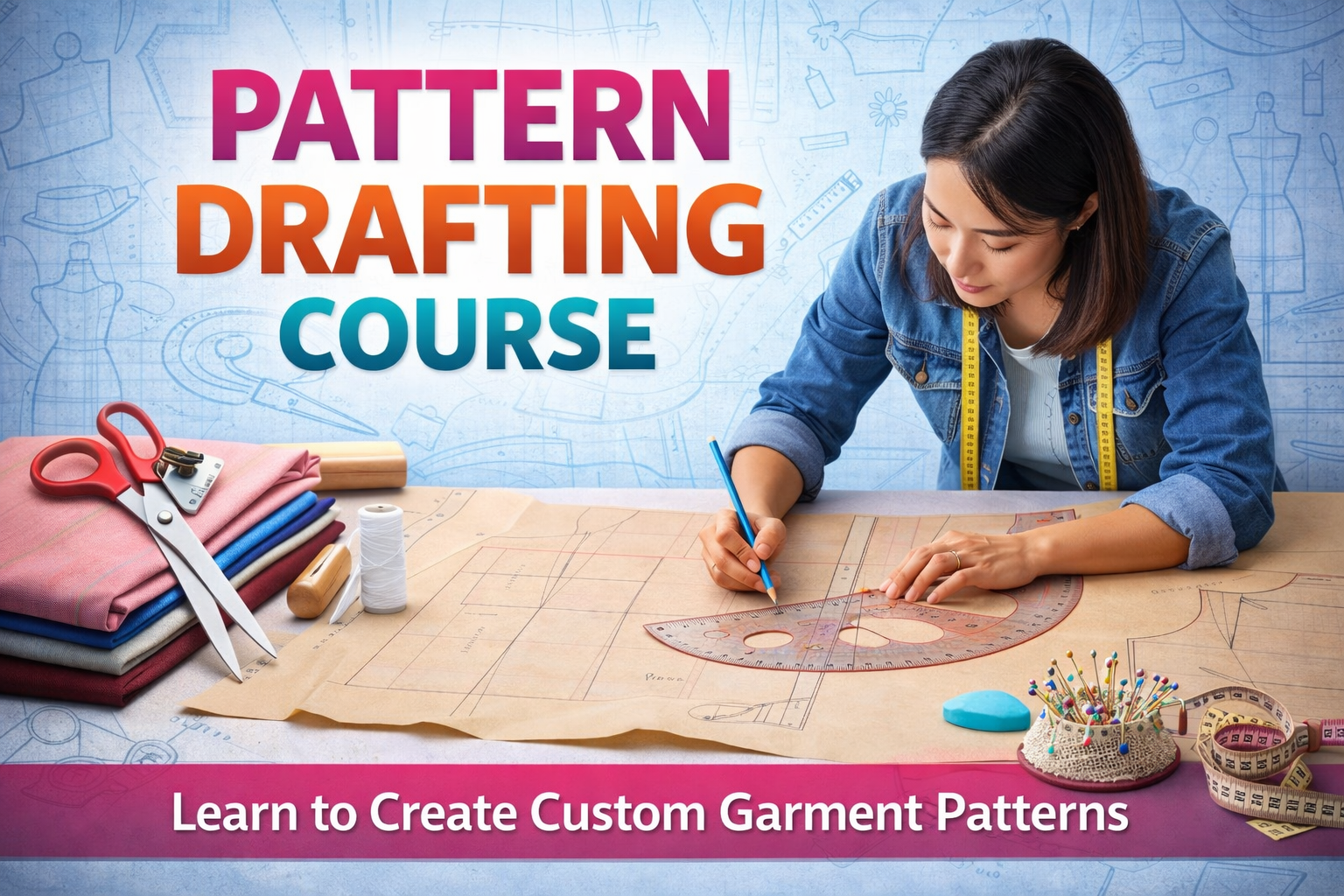
Unit Title: Pattern Drafting & Silhouette Development
Unit Description
This unit introduces students to the technical art of creating two-dimensional templates used to cut fabric for three-dimensional garments. Students will learn to translate body measurements into accurate paper patterns, ensuring proper fit, balance, and ease.
Learning Objectives
By the end of this unit, students will be able to:
1. Foundational Knowledge (The Basics)
-
Identify and utilize professional drafting tools, including L-squares, French curves, hip curves, and tracing wheels.
-
Demonstrate the correct method for taking accurate anatomical body measurements.
-
Define industry terminology such as grainlines, notches, seam allowances, ease, and darts.
2. Technical Execution (The "How-To")
-
Draft a "Basic Sloper" set (bodice, skirt, and sleeve) based on standard industry measurements or custom body specs.
-
Apply dart manipulation techniques using the slash-and-spread or pivotal methods to move fullness without changing the fit.
-
Develop various necklines and collars (e.g., mandarin, Peter Pan, notched lapel) from a basic bodice block.
3. Advanced Analysis (The "Why")
-
Calculate and apply "Ease" appropriately, distinguishing between wearing ease (movement) and design ease (style/silhouette).
-
Troubleshoot fit issues by analyzing a muslin mockup (toile) and adjusting the paper pattern accordingly.
-
Convert a 2D pattern into a 3D garment layout, ensuring all pieces align correctly with the fabric grain.
- Teacher: Admin User